.png)
Interior Designer vs. Interior Decorator: What’s the Difference?


If you’re planning to change your home, you’ve probably seen the terms interior designer and interior decorator used almost interchangeably. They overlap, but they aren’t actually the same job.
The simplest explanation is this: interior decorating is primarily concerned with how a finished space looks, while interior design considers how that space looks, functions, flows, and comes together.
And yes, designers care about throw pillows too. We just might also want to talk about why your kitchen island is making everyone walk in circles first.
What Does an Interior Decorator Do?
An interior decorator generally works with the space you already have. Think furniture, rugs, artwork, paint colors, window treatments, accessories, and all of the layers that make a room feel complete.
If the layout works well and you aren't planning to move walls, plumbing, cabinetry, or anything else construction-related, decorating may be exactly what you need.
Maybe your living room functions perfectly well, but everything feels slightly disconnected. The furniture isn't quite right, the colors aren't working together, and no matter what you buy, the room still somehow feels unfinished.
That is largely a decorating problem.
So What Does an Interior Designer Do?

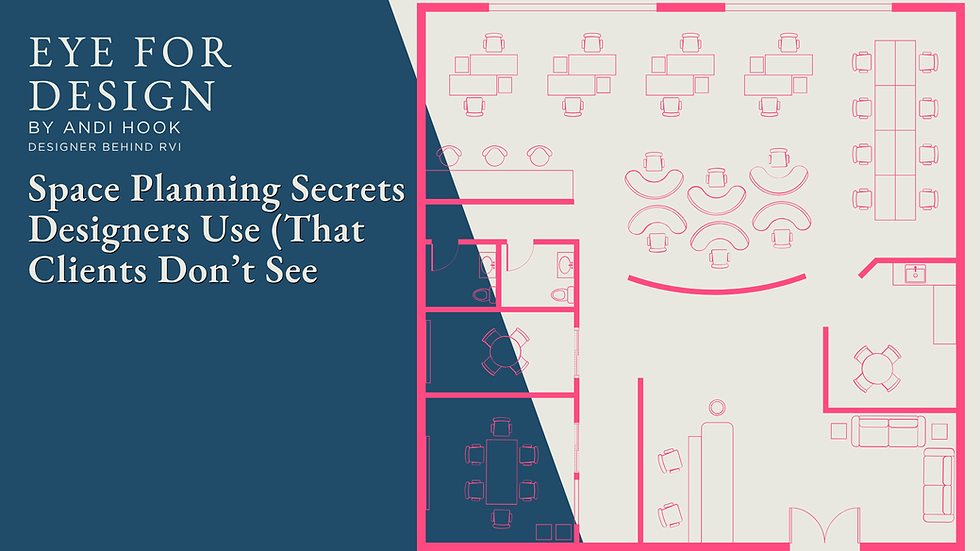
Interior design starts long before we choose a backsplash. Space planning helps us work through cabinetry, appliances, walkways and clearances before construction begins.

The plan determines how the space works. The rendering helps us understand how those decisions will look and feel together.
Interior design starts asking questions a little earlier in the process.
Instead of only asking what color the cabinets should be, a designer might ask whether those cabinets are in the right place at all. We’re thinking about layout, circulation, lighting, cabinetry, storage, materials, appliances, electrical needs, plumbing locations, and how all of those decisions affect one another.
Especially in kitchens and bathrooms, one seemingly small decision has a habit of dragging six other decisions along with it. (Renovations are fun like that.)
For homeowners remodeling in Salem, Keizer, or elsewhere in the Willamette Valley, this becomes particularly important in older homes. Existing architecture, unusual room dimensions, previous remodels, and the wonderfully mysterious decisions made by someone in 1973 can all affect what is actually possible.
Here’s Where the Difference Really Matters
Let’s say you hate your kitchen.
Naturally, you start looking at cabinet colors. Maybe you save twelve Pinterest kitchens, decide you like warm wood again, and suddenly you're comparing countertops at 11:30 at night.
But then we actually look at the room.
The refrigerator blocks a walkway when it opens. The trash is nowhere near where you prep food. Half of the lower cabinets are annoying to use, the coffee maker has claimed permanent residence on the counter, and everyone somehow ends up standing in the exact same three feet of floor space.
At that point, cabinet color is not really the problem.
You could install absolutely gorgeous cabinets in exactly the same layout and spend a considerable amount of money creating a prettier version of the kitchen that already drives you insane.
That is where interior design matters.
Good Interior Design Should Solve Problems

We obviously want your home to be beautiful. Materials, color, texture, proportions, lighting, and all those little finishing details absolutely matter.
But a beautiful kitchen that makes you take a lap around the island every time you need something from the refrigerator is still annoying.
The same goes for a gorgeous bathroom without somewhere convenient to put a towel, or a giant wall of cabinets where the things you use every day are somehow stored in the least accessible cabinet possible.
Pretty and functional are not opposing ideas. A genuinely well-designed space should be both.
The People Living There Matter Too
One of the biggest parts of interior design is understanding how the people in the home actually live.
Do you cook every night, or is your kitchen primarily responsible for coffee and DoorDash? Do you have kids? Dogs? Cats who believe they personally own the countertop?
Do you entertain twenty people at Thanksgiving, or does your dining table mostly function as an extremely expensive mail holder?
Are there mobility concerns now, or are you planning to stay in this home long enough that accessibility may matter later?
Those answers change the design.
There isn't one universally perfect kitchen layout, cabinet configuration, bathroom, or living room. There is a space that works particularly well for the people using it.
When Should You Hire an Interior Decorator?
A decorator may be the right fit when your home works well but doesn't quite feel right yet.
That might mean you're keeping the existing layout and primarily need help choosing furniture, colors, artwork, window treatments, accessories, or finishes. The bones are good. You just want help pulling everything together.
When Should You Hire an Interior Designer?
If you're changing how the space itself works, you're moving into interior design territory.
That can include remodeling a kitchen or bathroom, replacing cabinetry, changing the layout, moving walls, selecting permanent finishes, planning lighting, changing plumbing or electrical locations, or coordinating several connected spaces.
And you absolutely do not need to arrive already knowing which category your project falls into.
A surprising number of homeowners begin with, "I think I just hate my cabinets," and five questions later we're discussing why nobody can open the dishwasher while someone is standing at the sink.
Sometimes the thing that looks wrong is actually the thing that works wrong.
Why Design Before Construction Matters
Renovations are basically one enormous pile of decisions wearing a tool belt.
Where does the outlet go? How wide should this cabinet be? Which appliance are we buying? Does the backsplash stop here? Which way does that door swing? Can these two drawers open at the same time?
None of those questions sounds dramatic on its own. Together, they determine whether the finished space feels intentional or like twenty small compromises stacked on top of each other.
Making those decisions during the design phase gives us time to think through them before there is a contractor standing in your partially demolished kitchen asking for an answer right now.
Which is generally a much nicer way to renovate.
Interior Design vs. Interior Decorating: Which One Do You Need?
If your home already functions beautifully and you mainly want help making it feel finished, decorating may be exactly what you need.
If you're changing the way your home functions, particularly through a kitchen remodel, bathroom renovation, cabinetry project, or larger home renovation, interior design gives you a plan before construction begins.
At River Vann Interiors, we work with homeowners throughout Salem, Keizer, and the surrounding Willamette Valley, as well as virtual design clients across the country. Our goal isn't simply to make a room photograph well when we're finished.
We want it to make more sense every single day you live in it.
Because your home can absolutely be beautiful.
It should also work.


Comments